
Benchmarking Analysis
for J. Crew
Exploratory Analysis | Web Scraping | Data Visualization
In recent years, J. Crew has recognized the importance of aligning with evolving fashion trends and swiftly responding to shifts in consumer preferences to enhance its sales performance. The benchmarking analysis has yielded valuable data-driven insights, enabling the formulation of a forward-looking strategic plan that enhances J. Crew's assortment planning, refines pricing strategies, and aligns offerings with current customer preferences.
Pricing Strategies
Striking the right balance between profitability and affordability and retaining customers while maintaining healthy profit margins.
Assortment Planning
Offering products aligned with current trends and customer preferences to prevent excess inventory, minimize markdowns, and optimize profitability.
Customer Preference
Staying competitive, fostering brand loyalty, and sustaining sales growth by offering products and experiences that resonate with the target audience.
About J. Crew
J. Crew Group, Inc., an internationally recognized omni-channel retailer, operates 182 J. Crew retail stores and 140 Madewell stores. Known for its fusion of American casual styles with professional wear, J. Crew has become a renowned mid-range American brand since its establishment in 1983, embodying the spirit and interests of life, work, leisure, and even marriage.
Dataset Description &
System Design
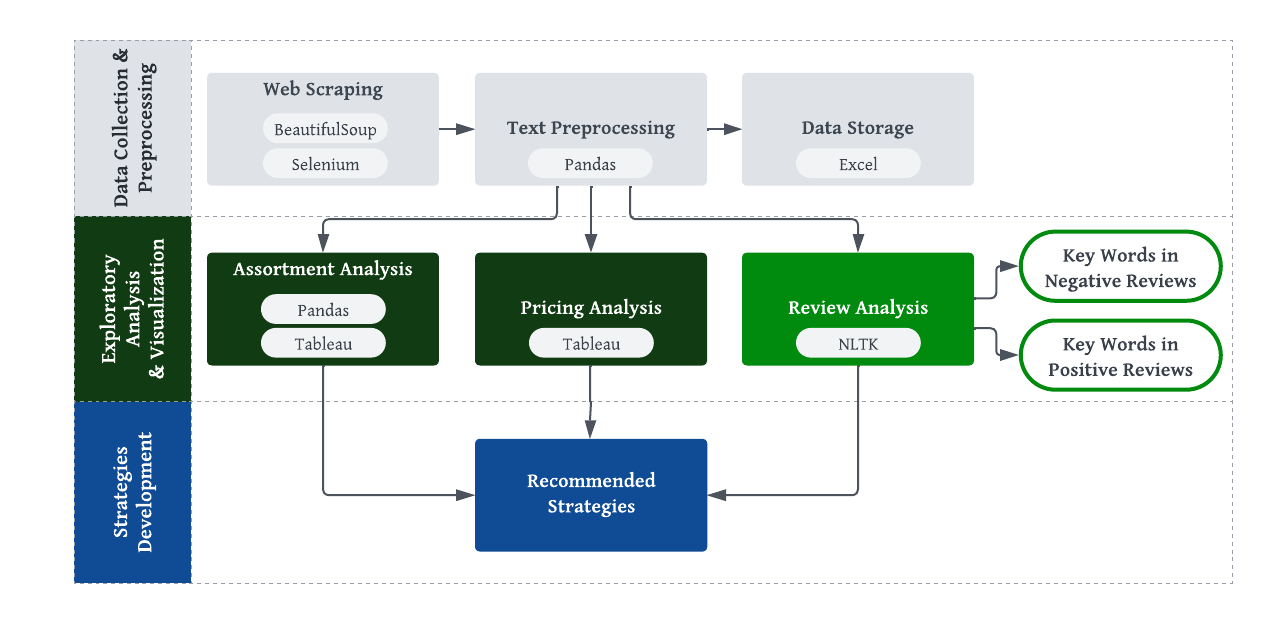
We obtained datasets through web scraping from four prominent fashion retail websites: J. Crew, Aritzia, COS, and &Other Stories. The web scraping process was facilitated using Python with BeautifulSoup and Selenium for data collection, while Pandas was employed for comprehensive data cleaning and preparation. Following that, we utilized Tableau, a robust data visualization and exploration tool, to conduct in-depth exploratory analysis, which consequently led to the formulation of recommended business strategies.
The quantities of SKUs obtained from each website are as follows:
J. Crew - 550 SKUs
Aritzia - 790 SKUs
COS - 310 SKUs
&Other Stories - 420 SKUs
Assortment Analysis
Retail assortment planning is a strategic method used to optimize merchandising and the placement of specific product variants (SKUs) to improve sales turnover. To enhance J.Crew's product assortment, we conducted a comparative analysis with benchmarking brands, which include Aritzia, COS, and &Other Stories. This analysis involved collecting essential data from these brands' websites, such as product names, prices, and the range of available colors for each product.
The two tables display the distribution of product numbers among different apparel categories, representing the proportion of the total apparel assortment available across the four websites. One table illustrates the current distribution, while the other one showcases the adjusted assortment following the replanning process. Notably, this project exclusively focuses on the apparel category due to its prominence, while other categories hold a relatively smaller share in the analysis.
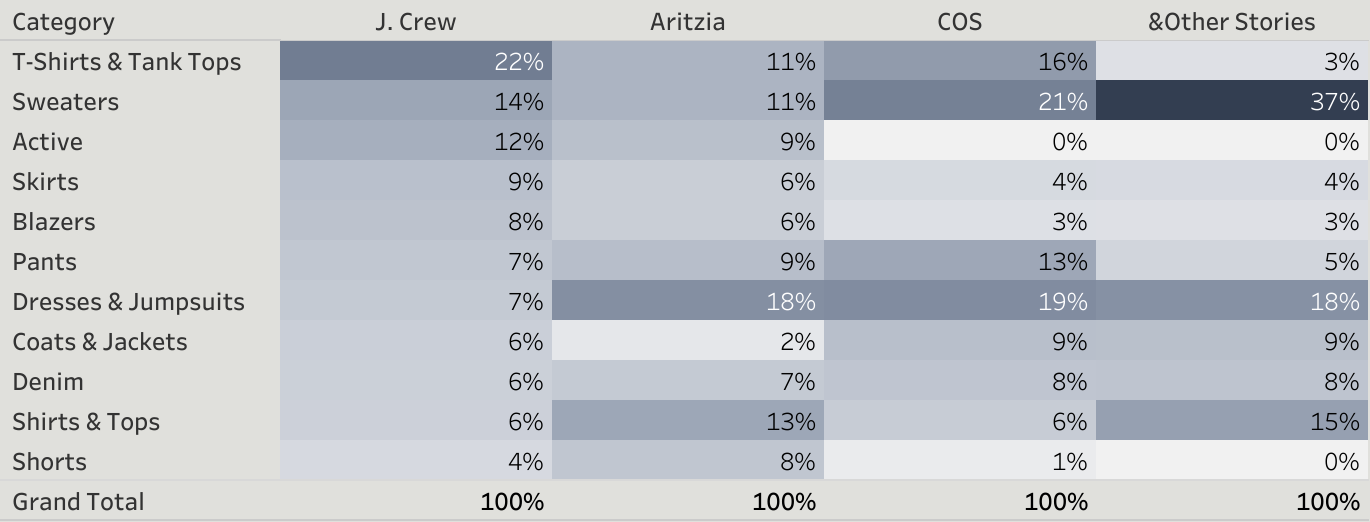
Table 1 - Current Assortment
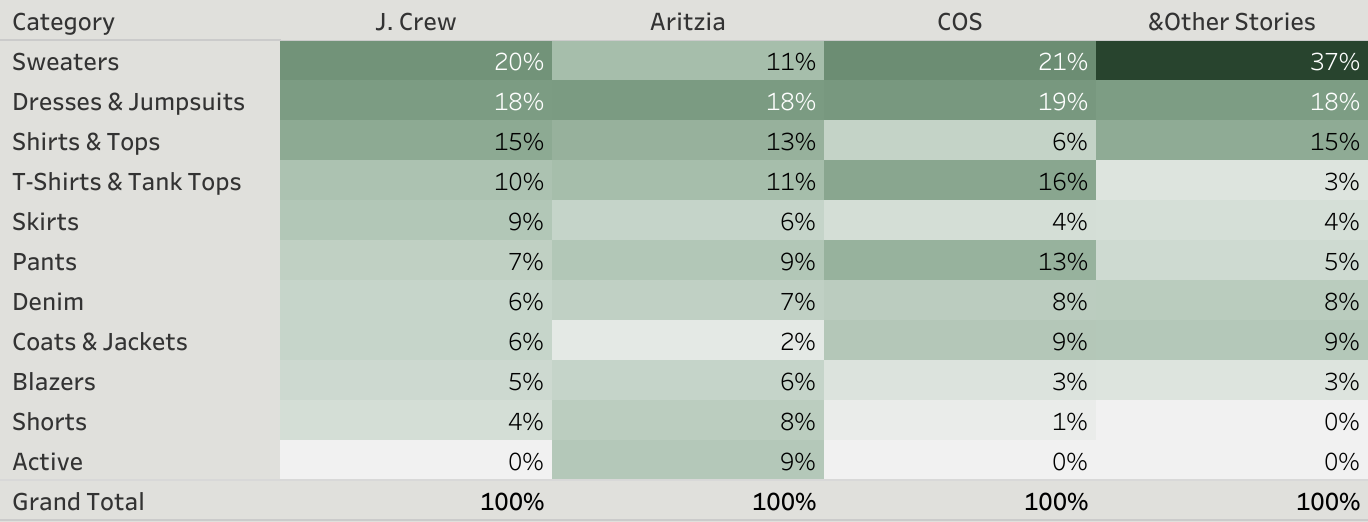
Table 2 - Suggested Assortment
Suggested Adjustments
1. Increasing Sweater Segment and Decreasing T-Shirts & Tank Tops
Within the top category, sweaters dominate among tops for the benchmarked brands as the current market trend demands an increase in knitted offerings. J.Crew, conversely, leans heavily on t-shirts & tank tops and should consider reallocating its assortment by raising the sweater segment to 25% and decreasing t-shirts & tank tops to around 10%.
2. Reducing Activewear Division to Maximize Efficiency
While activewear is trending, it's typically sought from specialized brands like Lululemon or Alo. Among the benchmarked brands, only Aritzia includes activewear. Therefore, we recommend J.Crew minimize the activewear division to under 5% or eliminate it entirely to enhance production efficiency.
3. Boosting Dresses & Jumpsuits Portion for Customer Demand
To align with customer preferences for formal or semi-formal occasions, we advise J.Crew to expand the dresses & jumpsuits category. This strategic move not only meets market demands but also capitalizes on J.Crew's strengths and nurtures customer loyalty.
Pricing Analysis
Strategic pricing plays a pivotal role in shaping a brand's identity and market positioning. We delve into J.Crew's pricing strategy across various apparel categories by comparing it with that of benchmarking brands, with the aim of shedding light on opportunities for improvement and potential markets. Our analysis employs box plots to visualize and dissect J.Crew's pricing across product categories. This visual exploration helps us identify opportunities for price adjustments by examining quartiles, medians, and outliers. This analysis covers key categories, from tops to bottom-wear, and dresses & jumpsuits, providing actionable recommendations to enhance J.Crew's pricing strategy and market appeal.
Tops - Shirt & Sweaters
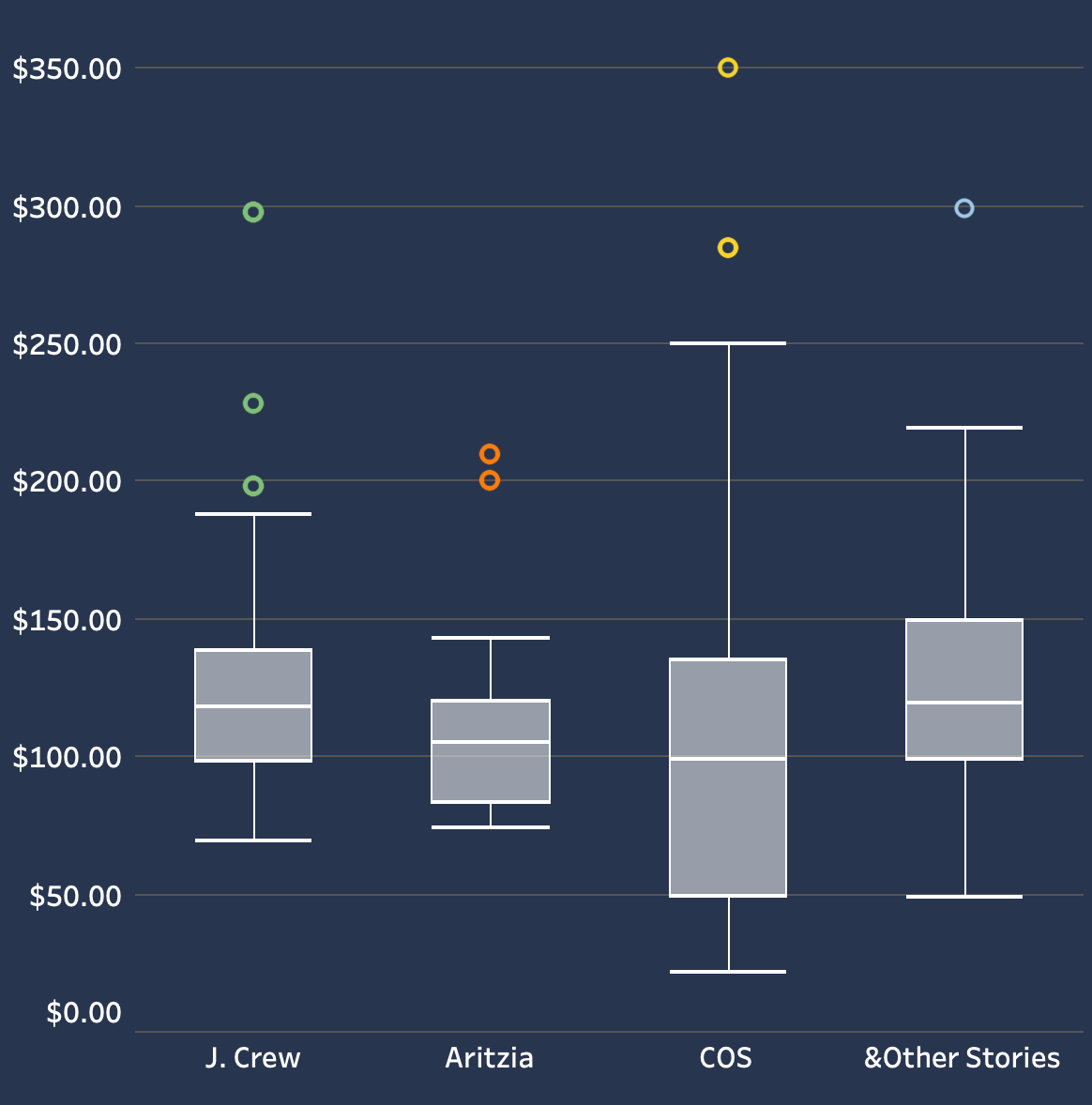
Introducing Wider Range to Bridge the Market Gap
Given that J. Crew's first quartile (Q1) and median (Q2) prices are comparable to those of & Other Stories, while its third quartile (Q3) price is lower, it presents an opportunity for J. Crew to expand its product line. We recommend that J. Crew introduce a wider range of sweaters in the higher price category that push the median (Q2) to achieve a target of $150. There seems to be a gap in the current market as & Other Stories offers more trend-oriented sweaters in the same price range. J. Crew can leverage this opportunity by offering sweaters in a similar price range but with a focus on professional and classic styles.
Bottoms - Pants, Skirts & Shorts
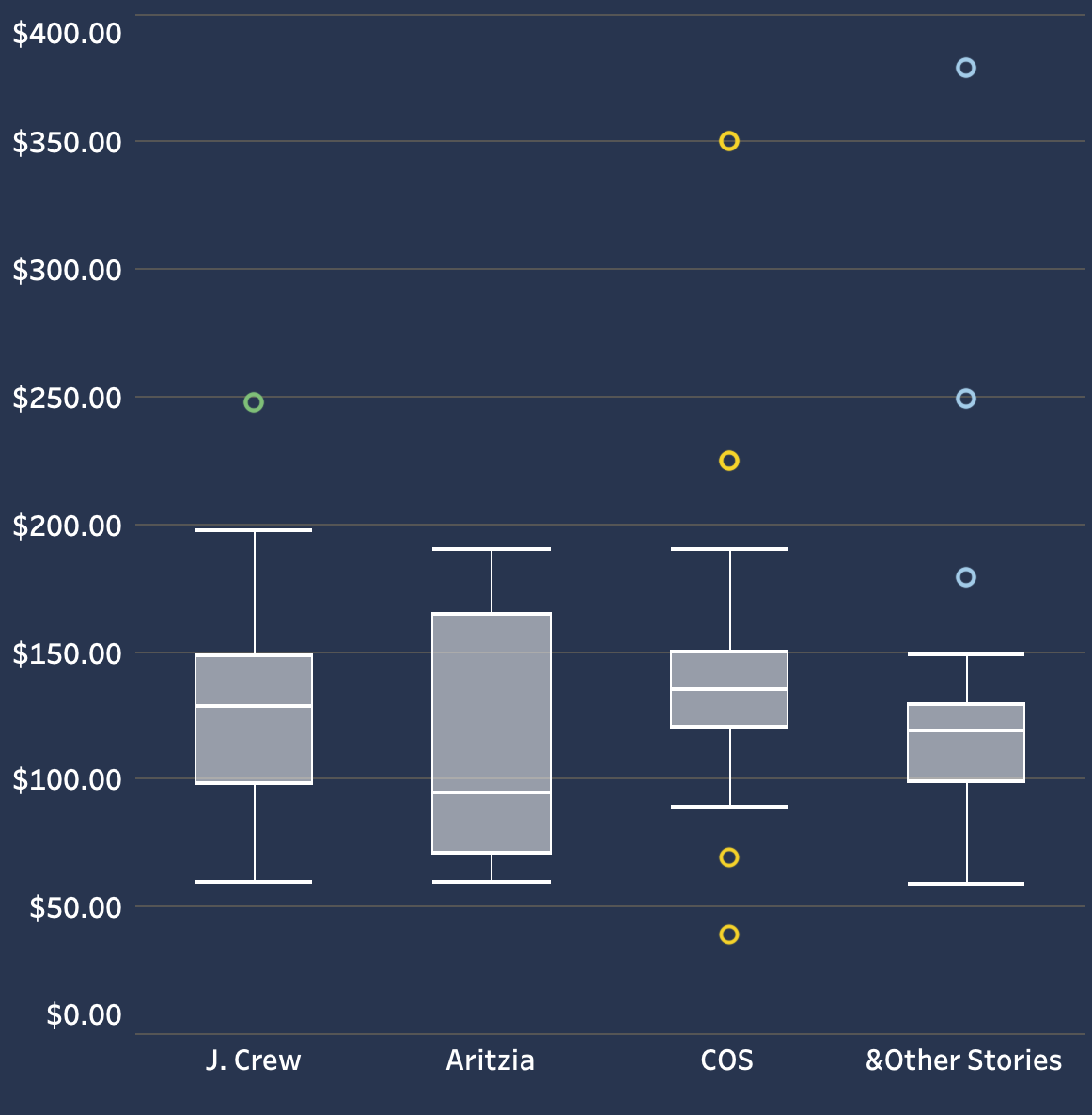
Raising the Middle Price and Upper Price Bound
J.Crew provides a wide range of price points for its bottom categories, spanning from $50 to $200. Currently, its median price (Q2) closely aligns with COS and &Other Stories. To bring its pricing in line with the higher range seen in other J.Crew categories, which surpass their benchmarked counterparts, and to distinguish itself in the market, we suggest that J.Crew expand its selection of higher-priced bottom items by shifting the third quartile (Q3) to $170 while aiming for a median price around $150.
Dresses & Jumpsuits
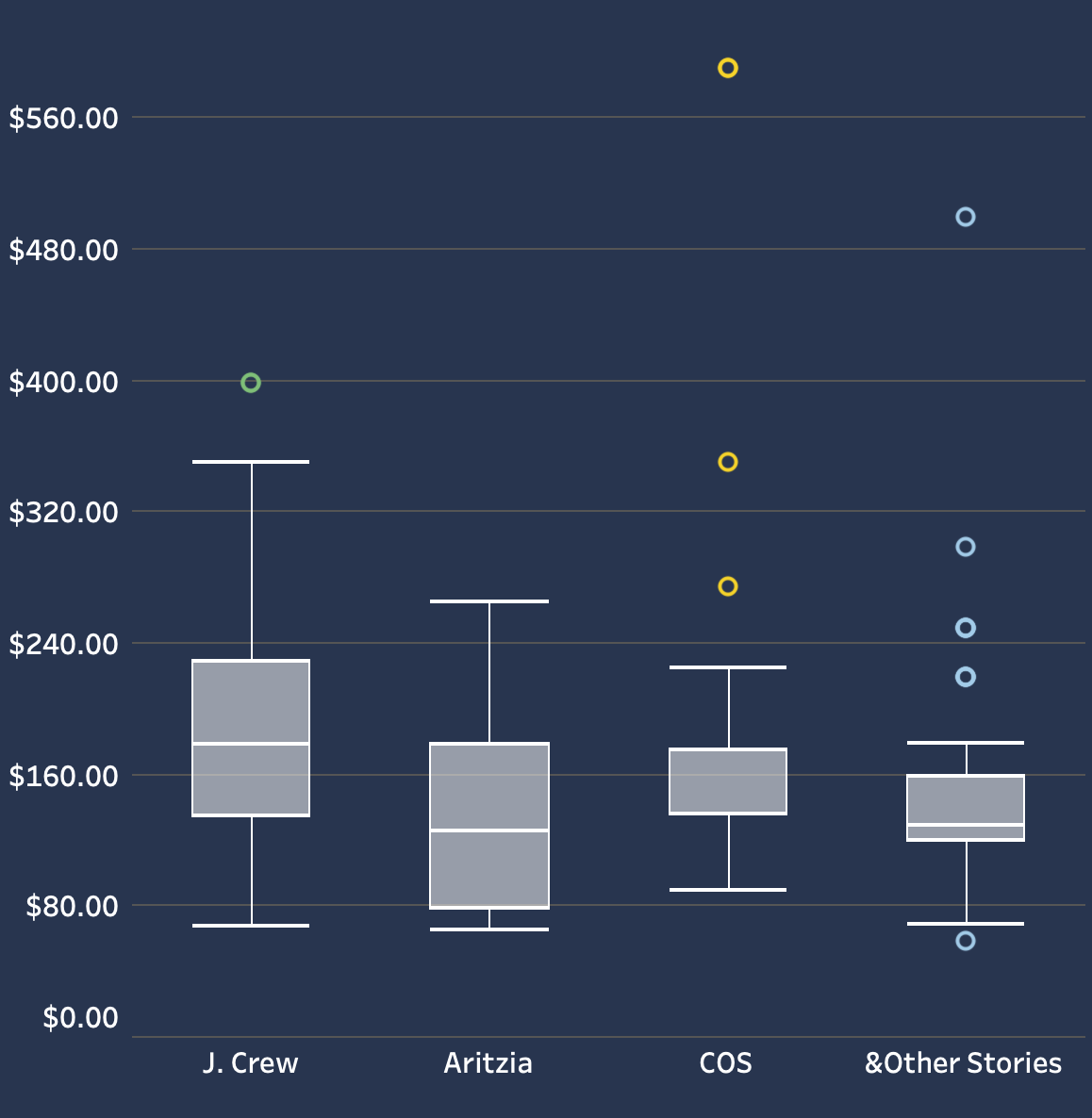
Eliminating Pricier SKUs to Narrow the Price Range
The current price points of dresses & jumpsuits align well with other categories at J.Crew as the first quartile (Q1) for these products covers the same price range that benchmarking brands offer in their third quartile (Q3). Simultaneously, the third quartile (Q3) for dresses & jumpsuits includes higher-priced products that are not typically offered by other brands. However, we recommend that the brand consider reducing the prices of the extremely high-end products that appear as the whiskers in the range of around $350. This adjustment will help reposition the brand and enable it to target customer segments more precisely.
Customer Review Analysis
In this phase of our analysis, we conducted a systematic web scraping of customer reviews from Aritzia's official website. Our primary goal was to identify product features commonly referenced by customers, whether expressed positively or negatively.
To illustrate this, we concentrated on the sweater category as a specific example, accumulating a dataset of 1,539 review. The result helps us identify the key features customers prioritize, guiding product line optimization and assortment planning to meet customer expectations and improve overall satisfaction.
Top 20 Key Words in Positive Reviews
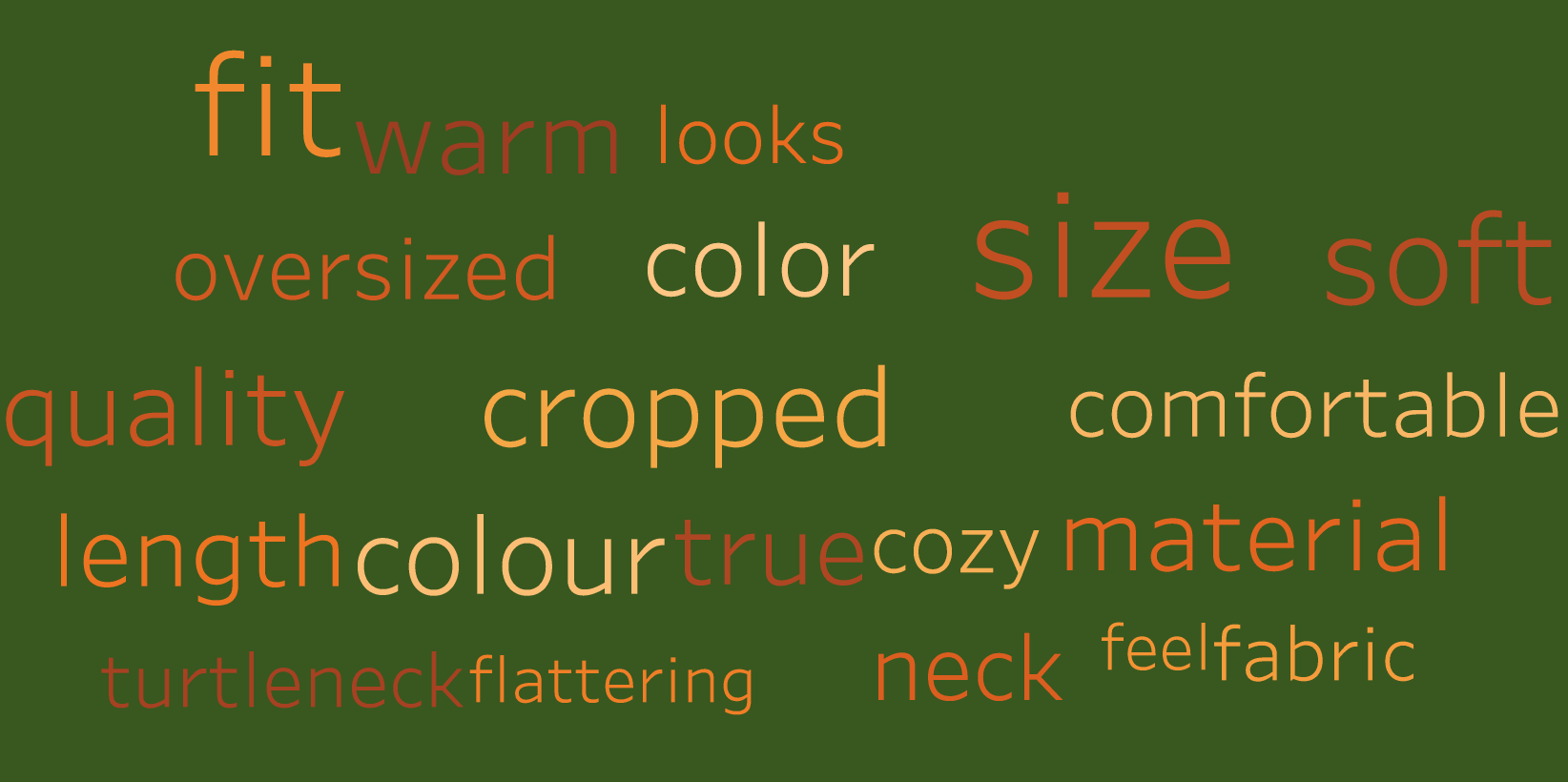
For positive reviews with three stars or higher rated on the website, we found 1,305 instances. The most commonly used words were 'size' and 'fit,' indicating that sizing accuracy is crucial to customers. Additionally, 'soft' was frequently mentioned, highlighting the importance of garment softness.
Top 20 Key Words Negative Reviews
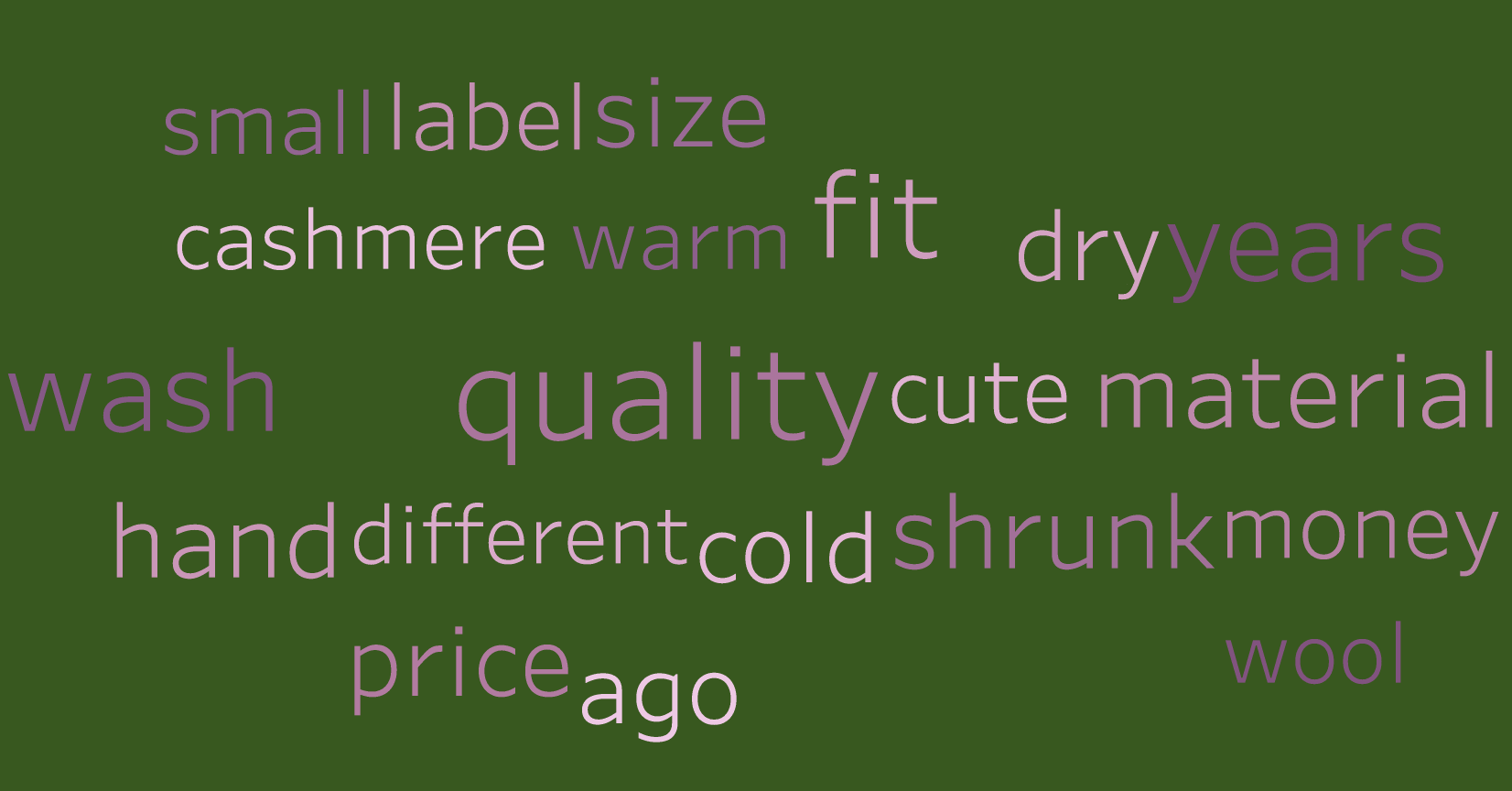
In contrast, we found 234 negative reviews with ratings of two stars or lower. The most prevalent terms in these reviews were 'wash' and 'shrunk,' indicating customer dissatisfaction due to sweater shrinkage after washing. 'Price' and 'money' were also frequently mentioned, underlining the significance of pricing. 'Cold' in negative reviews showed that warmth is essential for sweater design.
Conclusion
The analyses of assortment planning, pricing strategies, and customer reviews have revealed actionable insights that can be employed to enhance J. Crew's business strategies. These insights highlight opportunities for refining product assortments, optimizing pricing, and improving customer satisfaction. By implementing these findings, J. Crew can work towards both short-term improvements and long-term success in the competitive fashion retail landscape.
In consideration of potential opportunities to explore further, the following recommendations aim to refine and expand the analyses, enhancing J. Crew's competitive edge and adaptability to evolving market dynamics. These recommendations will guide efforts to drive improvements and maintain a competitive position for J. Crew in the ever-evolving fashion retail landscape.
Future Direction
Supply Chain Optimization
Extend the project's scope to optimize the supply chain by integrating production planning and inventory management based on real-time data and consumer demand.
Customer Personalization
Implement customer-centric strategies by utilizing data-driven insights to tailor product recommendations and shopping experiences.
Competitive Benchmarking
Expand benchmarking efforts to include a broader range of competitors, offering a more comprehensive understanding of competitors and identifying hidden market.
Continue analyzing website data to identify evolving market trends, enabling J. Crew to proactively adapt to changing consumer preferences.
Market Trend Analysis